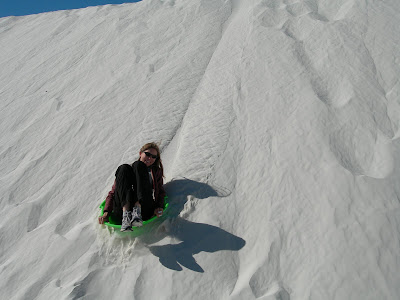
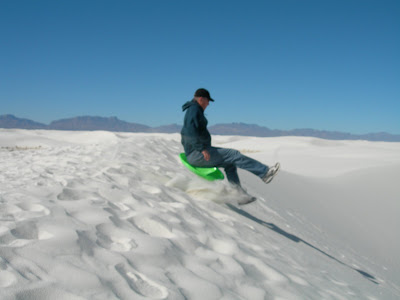
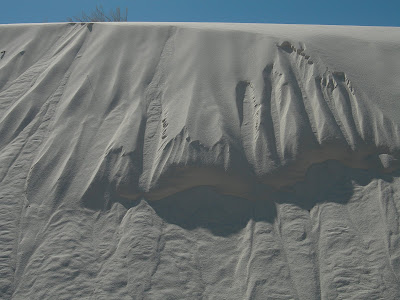
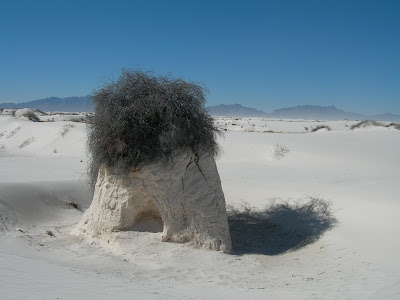
White Sands National Monument is right in the middle of a giant rocket-testing facility, and that’s what the museum was focused on. This gave an interesting nuts-and-bolts view of the space program, which was very different from the human-drama focus of Johnson Space Center which we’d see on our way through Texas. Both of these stops took longer than Dave’s estimation, so the little green men and their visits to New Mexico would remain a mystery…
The reason that we had such an action-packed start to our New Mexico visit was reservations for a cave tour in Carlsbad Caverns National Park. There are huge rooms full of amazing formations that you can see on self-guided tours, but for the really serious sections you need to have a few rangers along as guides. The tours are generally booked well in advance, but we did manage to book one space on the Spider Cave tour and two for the candlelight trip through Left Hand Tunnel. Viewing the cave formations by flickering candle lanterns was a very different experience from self-guided meander through the brightly-lit Big Room.
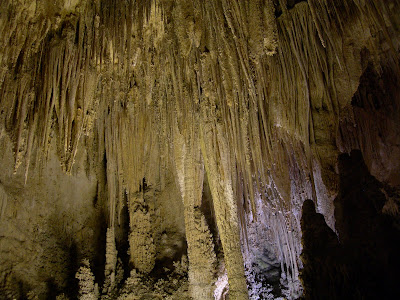
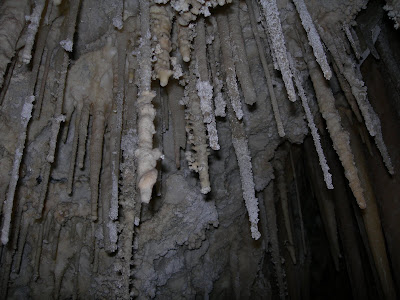
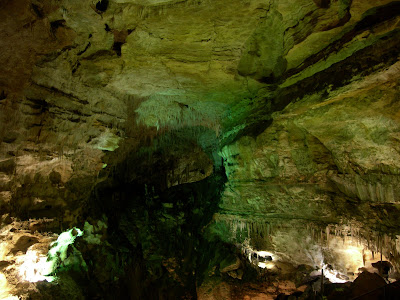
The Carlsbad website had all sorts of warnings about people with asthma going into the tight crawls of Spider Cave, so Dave had to face this one unaccompanied. The cave got its name from the hordes of spiders that used to occupy the first 30 or 40 feet of the entrance tunnel. This section is so narrow that you have to crawl on your belly with your arms in front of you; so having the walls “pulsing with life,” as one ranger described it, must have been quite the experience. Fortunately the spiders were no longer present, and there were only a few blind cave crickets watching as we squirmed through into the Auditorium. The Auditorium is the first room in Spider Cave, and is probably the size of a cargo van. After the opening crawl it really did feel like an auditorium…
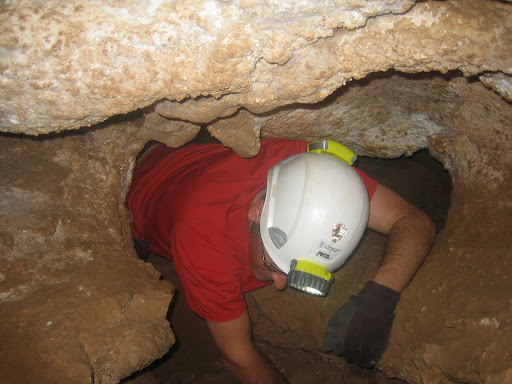
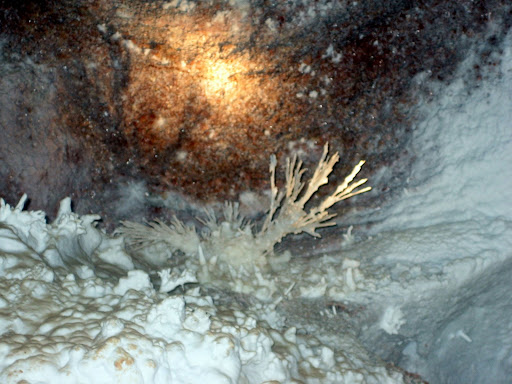
The formations deeper in the cave were like nothing I’d ever seen before - they looked more like deep-sea life than rock. Calcite deposits formed under pressure into snowflakes, or ‘popcorn rock,’ or spongy-looking helictites that looked like undersea sponges. We had to move very carefully through the tight passages, since the formations are extremely fragile and the slightest touch could destroy them.


No comments:
Post a Comment