Sunday, August 10, 2008

Trip Statistics

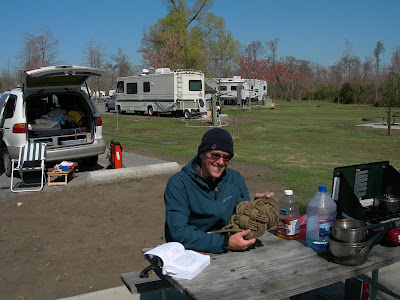
During our trip we definitely had time for some whimsical hobbies – Dave took up decorative knotting and part of Megan's time was spent collecting a wide variety of statistics about our trip, a fun way for us to try and paint a picture of what went on for us this past year. Hopefully they will be somewhat entertaining for our readers, for us they will serve as a great reminder of our trip in years to come!

Total Length of Trip: 10 months, 2 weeks

Time Spent in South America: 3 months

Time Spent Traveling in Moby the Minivan: 7 months, 2 weeks

Moby’s Square Footage (approx): 35 square feet
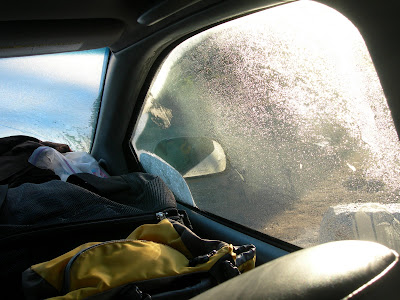

Frosty windows in Arizona

Total Number of Destinations: 85 stops in 5 countries (Peru, Argentina, Chile, US and Canada - more if you count Texas as a separate country)

Total Miles/Km Driven: 15,941 miles or 25,654km
- This is 1.7 times the average for a vancouver-based car, but about average for a commuter in Langley

Total Miles/Km Hiked: 353.8 miles or 566 km

Number of Official Parks Visited: 30

Amount of Time Spent in Official Parks: 147 days Of the approx 224 days we spent traveling in North America, 142 days, or 64% were spent in some kind of a Park. We spent the longest time at Joshua Tree National Park in California, at 26 days total.

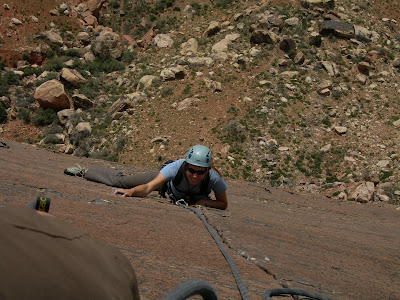
Number of Climbing Areas Visited: 12 (76 days climbing)

Kites made: 2

Kites that flew: 1
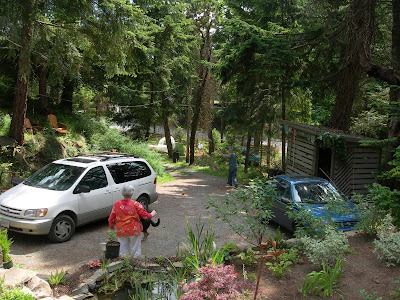

Jon & Jen kite-testing

Highest Speed Limit Seen: Texas, 85 miles/hour (137km/hour)

Most Expensive Campsite: Hornby Island, $32 a night

Cheapest Motel Room: Somewhere, New Mexico, $41 a night (we saw cheaper advertised, but they looked scary)

Total Nights Sleeping in Our Tent: 112

Total Nights Sleeping in Our Van: 59

Total Nights with a Peruvian Family Homestay: 17

Total Nights in US Motels: 9

Total Nights in South American Guesthouses: 36

Total Nights Couchsurfing with Family and Friends: 64

Total Nights Sleeping in Airports: 2

Highest Route Climbed: 2000 feet (609 metres), Solar Slab, Red Rocks

Longest Hiking Day: 19 miles (30.5 km), North Carolina

Highest Scrabble Score: 656 (combined)

Hours Spent Listening to Harry Potter Series on Ipod: 182 hours, 21 minutes (equivalent of 5 full days)

Types of Wildlife Viewed: (Since we are not able to identify most birds, this list does not include the many, many types of birds I’m sure we encountered!)

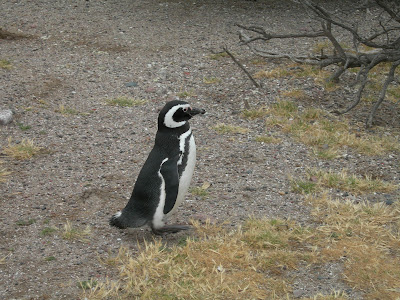
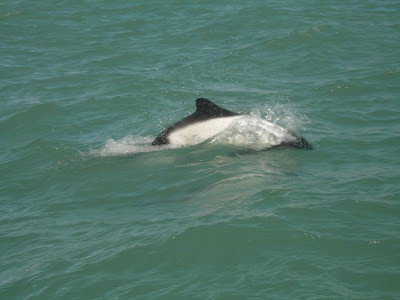
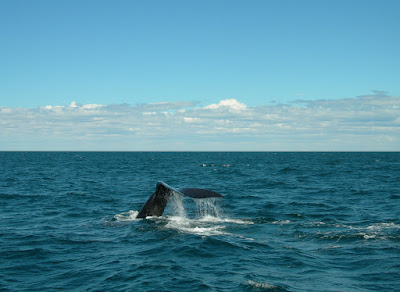
South America: Guanacos, Llamas, Alpaca, Andean Condors, Capuchin Monkeys, Coatis, Elephant Seals, Southern Right Whales, Dolphins, PENGUINS!, Caymans, Millions (it seemed) of Butterflies

USA: Coyotes, Alligators, Armadillos, Nutria, Deer, Raccoons, Turtles, Owls, many fat Squirrels and Chipmunks being fed by people in National Parks.., River Otters, Fresh water lobster, Frogs, Snakes (several very multi-coloured constrictors in Yosemite), Elk

Canada: Rattlesnake, Harbour Seals, Eagles, Harbour Porpoises, Mink, Black Bear and Cub, Sea Otters, Grey Whales, Pine Marten, Sea Lions

Sunday, July 13, 2008

Farewell, Moby!

The time has finally arrived to bid adieu to Moby. After faithfully carrying us the length and breadth of the US, and then home to BC, he's back on the car-lot, looking for a more 'normal' existence for a minivan: carting kids to soccer practice and back. Or maybe he'll find another pair of vagrants to hit the open road with...

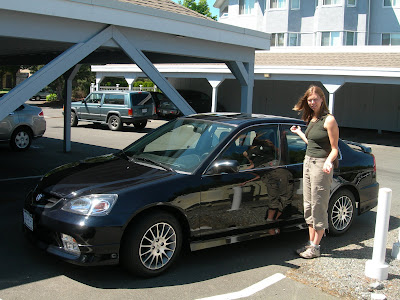
In Moby's parking space is now an as-yet unnamed sedan, which boasts a great stereo, fantastic handling, and even heated seats, but barely sleeping room for Max the tabbycat. It's a toss-up which vehicle suits carrying a canoe less, but the new one sure is easier to park!


Is this really our car?

Tall Ships, Nanaimo, and Hornby


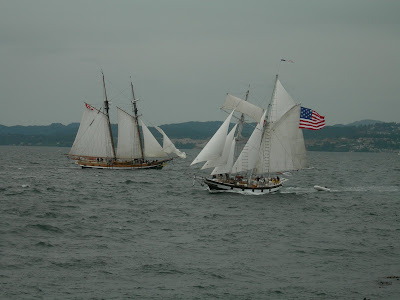
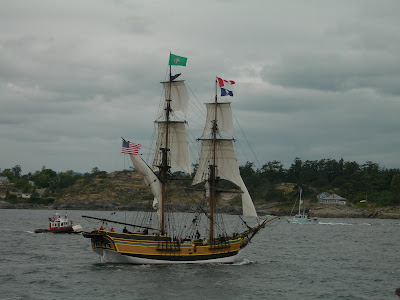
Lady Washington reducing sail

After taking advantage of Megan's parents' place for recovery (again) and spending a day at the Tall Ships festival in Victoria, we headed up-island to Nanaimo for some climbing. At least, that was the plan. The crag we went looking for was somewhere in the middle of a new housing development, so all the trail directions in our guidebook were wrong. We wandered a bit, but after a month each in Red Rocks and Yosemite we weren't really all that charged up for the little Nanaimo crags anyway so we didn't look all that hard. We chilled out at camp for one day, and the next we met up with Megan's friend Jenny, who was laid up with a badly sprained ankle and looking for some distraction. We had dinner with them and a few beers, and crashed in their spare room. Sleeping in a bed is becoming a habit again! The next day we rented movies and chilled out some more before returning to camp.
The next day we were off to Hornby island, for a few days of amazing, fun, non-scary mountain biking. In 2 days Megan went from dismounting to avoid obstacles to rolling over them at full speed and with great style! The island is just as beautiful as Dave had remembered from visits as a kid and BikeFest, but details of winding down our trip a bit ahead of schedule led us to shorten our visit to just 2 nights. Dave was in the midst of looking for work, and Todd would be moving earlier than originally planned so we headed back to Vancouver & Victoria to start getting our 'real' life together.


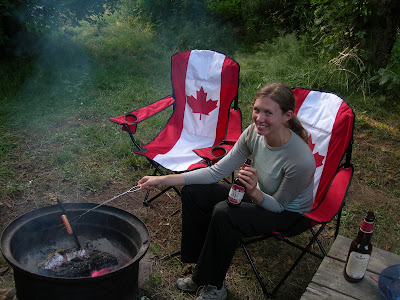
Megan getting into the spirit of island camping

Saturday, June 28, 2008

Hiking, Juan de Fuca and West Coast trails

Having Saltspring as a base of operations allowed us to plan for some bigger adventures with relative ease. We had reservations on the West Coast Trail, but thought we should do a shorter, easier walk as a test-run. So we dried a bunch of food, packed our bags, and headed off to the Juan de Fuca Trail.
We found the trail to be muddy, difficult, and nearly deserted. The campsites were generally fantastic, and only on the last night did we have anyone camped near us. We had pretty good weather, but it had been rainy the previous few weeks, so creeks were high and mud was deep!


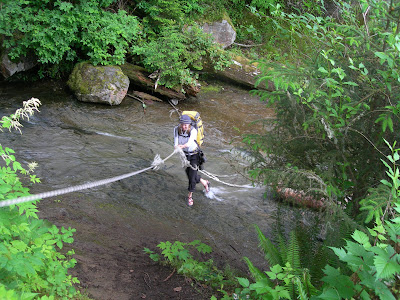
Megan crossing a creek on day 2


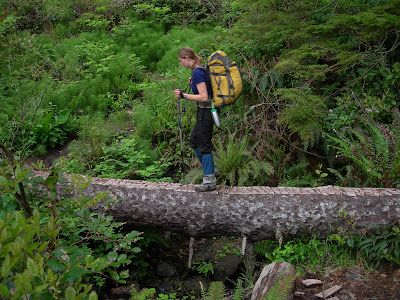
Bridge Crossing


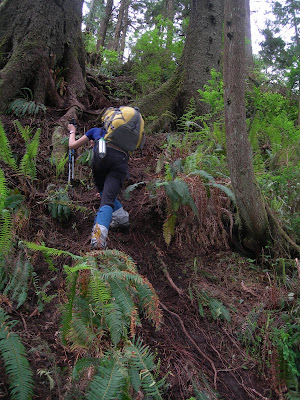
This was much steeper than it looks here!

The trail was nearly all in the trees, so the only ocean views were at the campsites. There were a few moderate sections, but it alternated a lot between pretty easy and steep, muddy, and hard. All in all a great trail, but since there aren't a lot of camping options you should pick your start times carefully. Having a pickup at the other end is awesome, as the bus only runs once or twice per day, and is expensive (thanks Don & Geri).

With our test-drive completed, we went back to SaltSpring to recover a bit, and dry a lot more food. Jen and Jon were off sailing, so we could take over the kitchen and not be in the way. This was good, since the dehydrator was running for 3 days straight!

With packs loaded with food, clothes, mail, and other random heavy stuff we drove back up to Port Renfrew. We did the mandatory orientation session the day we arrived, to speed up our launch the next day. Day 1 started off with a long and very bouncy bus ride, which was probably why the first section of trail (widely described as the easiest) felt so difficult.

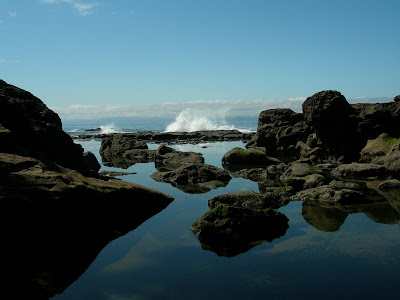
Days 2 and 3 were mostly fantastic beach-walking, with occasional trail sections as rest. We saw amazing tide pools, had lemonade and cookies with the lightkeeper at Carmanah, and dropped off our mail. The mail was from Jon (Dave's stepdad) to a 73-year old man living alone in the woods near the former Clo-oose village site. Oddly he doesn't like the work 'hermit' :) We were warned that he might not take kindly to visitors, so we left the letter with the Carmanah lightkeepers. Dave took a few thousand pictures of breaking waves and tide pools, 3 or 4 of which may turn out OK :)


Breaking wave behind a pool


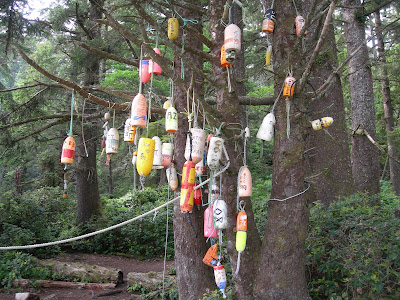
Beach accesses were marked by float trees


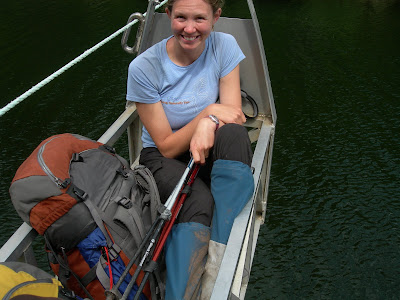
Many rivers were crossed by cable-car, rather than bridges. Fun!


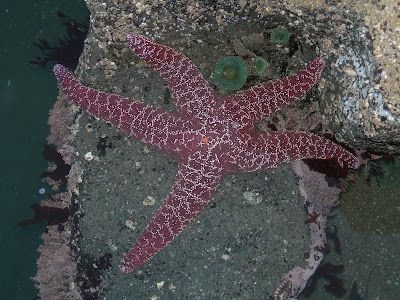
BIG starfish - maybe 14" across


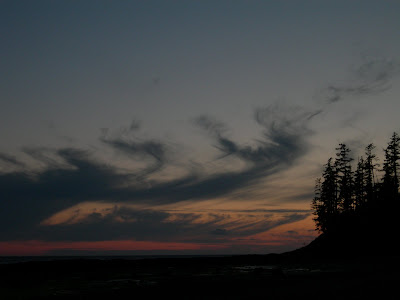
Sunset at Cribs Beach - day 3


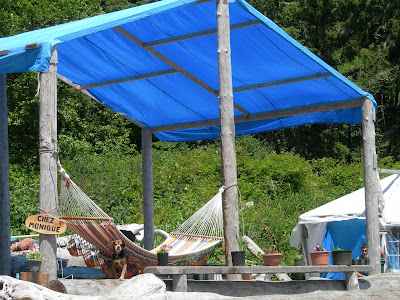
Chez Monique's - the cafe south of the Carmanah Light. Great egg-burgers!

We had planned to do the trail in 7 days, but the last part seemed a lot like the Juan de Fuca trail, and we wanted to see the opening parade at the Tall Ships festival in Victoria, so we followed the lead of a friendly Aussie couple we'd met on the trail and combined our planned days 5 and 6 into one. This was a long, but generally OK day. The last bit (kms 68-70) seemed endless, tho. Thrasher cove was by far the smallest and most crowded campsite - next time we'd rather stay at Camper Bay, and skip by Thrasher on the last day. Camper looked great when we stopped there for lunch...

Overall we didn't think that the trail's brutal reputation was really justified, but then we were carrying a lot less than many of the people we saw. If we'd been as loaded down as the father/son pair we saw on the last day we'd probably still be there!


Our reward for hurrying - a great view of the Parade of Sail

Gulf Islands – Salt Spring and Wallace Island Kayaking

Lucky for us, we both have family on various islands (Salt Spring, Vancouver Island) and we are currently basing ourselves on Salt Spring Island, with Dave’s mom, stepdad and dog Mati. After almost 6 months on the road based in our car, the luxuries of family, home-baked cookies and a warm indoor fire are amazing (and let’s be honest, not having to cook on a campstove in high wind and get out of a tent to go pee in the middle of the night are also pretty nice changes…)


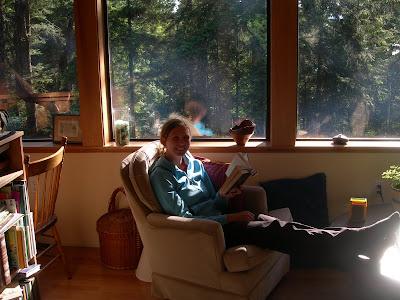
Megan experiencing the wonder of the Comfy Chair

With just under two months to go before we take back our house and resume ‘normal’ life, the adventures (and of course rain) of BC await. Salt Spring is an excellent base, we have been canoeing, sailing and climbing since we’ve been here. The climbing is found high on Mount Maxwell, the bluffs are short conglomerate rock faces with a gorgeous view of the water below. One catch is that there does not appear to be enough climbers on Salt Spring to stem the tidal wave of moss that seems to accumulate on the rocks in this climate…the result is that most of the climbs are quite dirty, with the more difficult (mid 10’s) being completely overgrown. However, the moves are fun and it makes for a good one day outing.

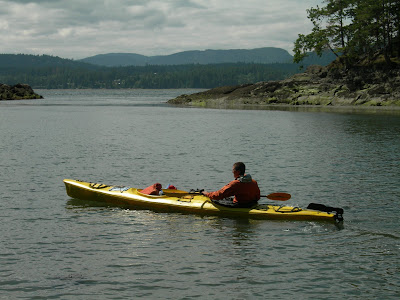
Last week we rented a tandem kayak and paddled across to Wallace Island to set up a base camp from which to explore some of the smaller adjacent islands. Wallace Island is largely a provincial park, with a gorgeous campground (and most importantly, a covered cooking area) and a small dock. We spent two nights on Wallace, with one day spent circumnavigating the island and another spent exploring the Secretary Islands. This is an excellent area for viewing all kinds of marine life – we saw everything from eagles to mink to a huge harem of seals that we scared from their comfy rock lounging.


Dave in our tiny double kayak


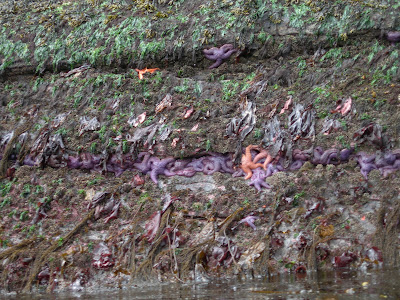
Starfish colony


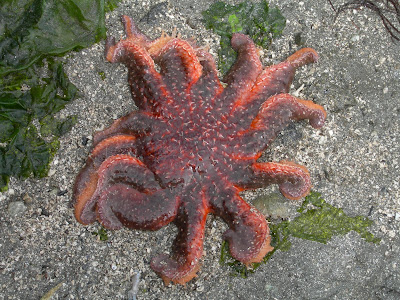
Sun-Star

However, after being rained on for a large part of the trip we were pretty happy to return to the warmth of the Salt Spring house and cozy up…we’re getting used to indoor life again!!!


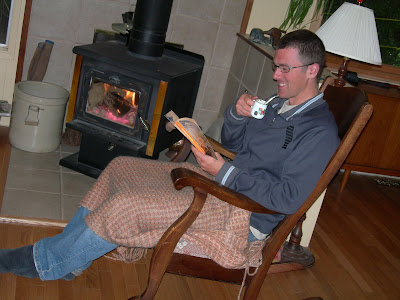
Fire Good!

Tuesday, May 27, 2008

Back in Canada, and a little sunburnt

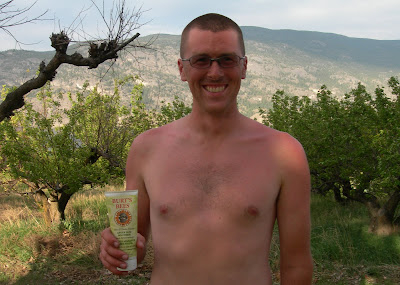
After the Redwoods we headed back to the big highways and across the border. We'd seen a lot of cool things in the US, and had a lot of fun, but we were pretty happy to be back in Canada. Our first stop was Penticton, for some swimming, some sport climbing, and a winery tour. And, since it was the May long weekend, we both got sunburnt. It is a Canadian tradition, after all...

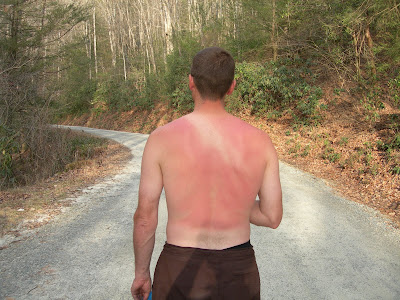
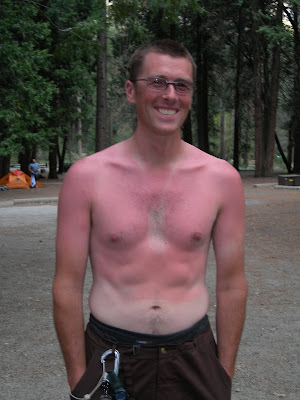
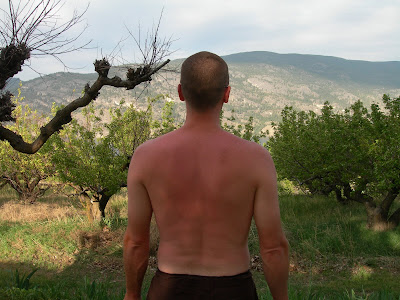
For Megan this was slightly unusual, since she's religious about wearing enough sunscreen. Dave is a bit more relaxed about sun exposure, so this wasn't the first time he'd been a bit toasted this trip. Dave does have a habit of stenciling the day's activity into his burn, by leaving a few uncooked bits. We both had a pretty good sandal-tan by this point, but Dave had also done some more creative stenciling with various bits of climbing gear:


Harness and rack, North Carolina


Harness and radio, Yosemite


A more even burn after swimming and cragging, Penticton


Thanks Geri!

Redwoods National and State Parks

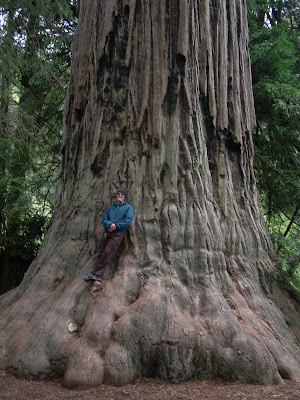
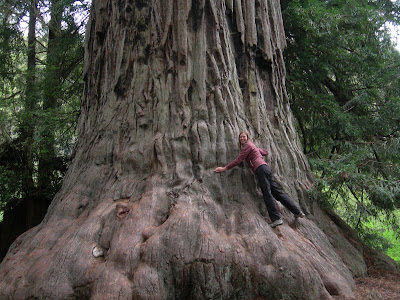
After spending a few weeks with the big rocks, we headed north to see some big trees. We’d both had about enough of huge driving pushes, so spending a few days hiking and relaxing under 250+ foot trees sounded like a great way to break up the drive back to Canada. Unfortunately Dave had a bit of a cold, so there was more relaxing and less hiking, but it was truly a magnificent place to spend some recovery days.


Chillin' under a tree


Treehugger!

The national park includes a number of former state parks, and (oddly) some of the land between them that was clearcut a decade or two ago. This is described as "future old growth". There are still quite a few state parks in the area, and we actually camped in a state park just down the road from the national parks.


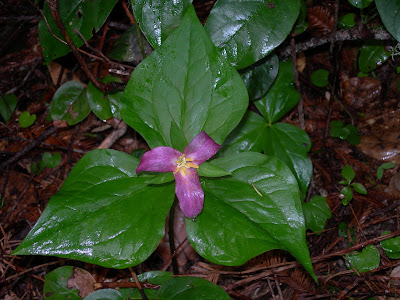
There were some smaller plants, too

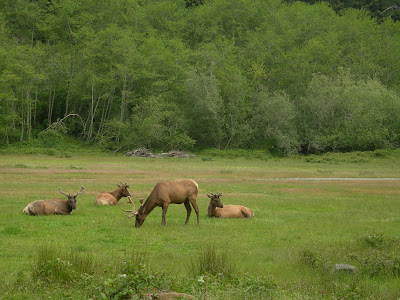
The park is also home to a herd of elk – we thought it somewhat ironic that we came to California to see elk, but there you are…

Wednesday, May 14, 2008

Yosemite

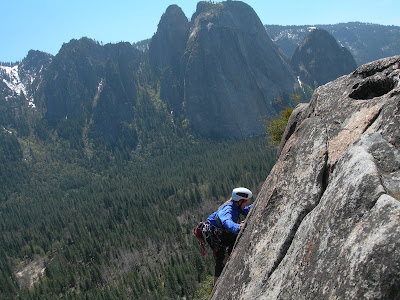
One of the major attractions of heading back west when we did was the opportunity to climb at Yosemite. After Dave’s success on the Nose last year with his partner Brock he was itching to return for more long and fun granite. Megan had only climbed one day during our trip here in 2006, due to blisters, injury and one lost approach trail. So we had lots of climbs on our tick list.

We started off staying at Camp 4, traditionally the climber’s campground in Yosemite as it is the only walk-in campground and all other campgrounds were reserved. The night we arrived it sprinkled a bit but the rock was dry by midday and we were climbing at the VERY popular Swan Slabs by late afternoon. Swan Slabs is the Yosemite version of Burgers & Fries cliff in Squamish, with packs of guides swarming the place with their clients during the weekend but during the week the climbs are worth doing, with lots of fun moderate crack climbing on offer. On our second day we headed for the classic 5.6 Munginella, originally named for being a bit, well, mungy and dirty. The climb is excellent with lots of fun moves and some requisite dirt and sand at the top. We also met an English couple on the route who had just arrived in the US, bought a car and are off for a 6 month climbing road trip. They became our friends in Camp 4.

The weekend in Camp 4 became less like a climber meeting spot and more like high school hell, with a pack of drunken teenagers monopolizing the place for the weekend. US Parks budget cuts (hey, I guess they need more firepower abroad?) mean that Camp 4 was not on the Ranger radar until May… quiet hours what? On Sunday, we climbed an amazing 2 pitch crack route- Jamcrack – and were fortunate enough to learn from some nice locals about getting a campsite through the cancellations lists at the other, much nicer campsites. We lucked out and got a site for a full week at Upper Pines and so we able to leave Camp 4 after a week. We convinced Helen and Lewis, our new English friends, to come and live with us in the plush new site. They were good fun and were teaching us ‘cheating’ Scrabble and other useful things!

Installed in our new site, surrounded by trees and the occasional motor-home, we were much happier and got down to some more demanding climbing days. We finally climbed Nutcracker, a historical 5.8 multi-pitch on the Manure Pile Buttress (a great piece of rock), which was apparently the first route in the Valley first led on ‘nuts’ (a new type of climbing protection). However, there was still a multitude of piton scars (an older type of protection, now frowned upon in places) on the route, which was a mystery to us.


Helen about to top out on Nutcracker

Over the next few days Dave climbed a few extra days with first Helen and Lewis, on the Central Pillar of Frenzy, then with Lewis on Selaginella, a wild 5.9 offwidth. For those non-climbers in the audience: offwidths are cracks that are too big to jam hands or feet in, but too small to fit the entire body in. Climbing them involves techniques that few climbers can apply gracefully, and usually a lot of grunting and sweating. The climbing experience can also vary greatly depending on the size of the climber.


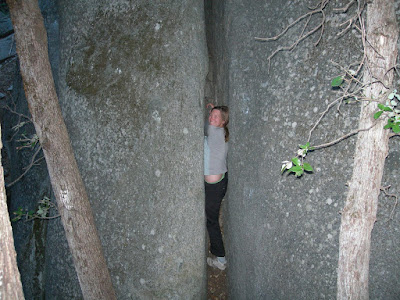
Fun chimneying for some


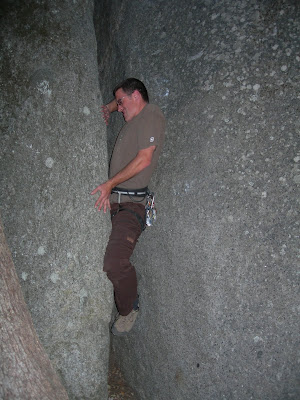
Hard offwidth for others

Rather than ‘enjoy’ any more wide cracks, Megan and Helen took advantage of the free art classes offered daily at the Yosemite Art Activity Centre. The technique the day we went was ‘travel sketching’, which seemed very appropriate for our situation. Yosemite’s landscape pretty much inspires even the most art illiterate to try their hand and Megan really enjoyed the experience.

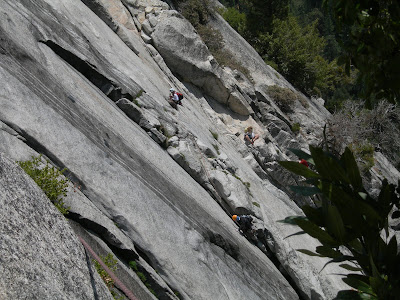
For our final day, all four of us went to climb Royal Arches, a classic and very long (15 pitches up and 12 rappels down) route. After our 9 hour day on the wall we pretty much scarfed food and were in bed by 8.30! We left the next day after spending about 2 1/2 weeks in the Valley, wishing our new friends good luck and hoping to see them later this summer in Squamish…


Lewis leading, Helen belaying, soloist sunbathing - Royal Arches


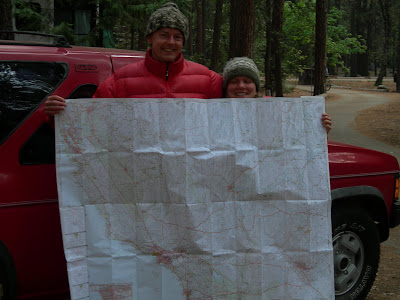
When you're traveling in a big country, you need a big map!

Zion National Park

A year or so ago, we visited Zion for just one day as a day-trip during a trip to Vegas. After seeing the canyon, we put Zion on our ‘definite’ list for our long trip. Zion is a sandstone canyon, carved by the Virgin River and part of the Colorado Plateau/Grand Canyon basin. Basically, it has cliffs on the scale of Yosemite’s granite only in a seemingly never-ending palette of red, yellow and orange rock, skirted by a lush forest of deciduous trees. Zion is famous for ‘hanging gardens’ of plant life high up on the rocks, life that exists because of the constant, slow seepage of water through the porous sandstone. Zion is also a very well managed US National Park and includes a free, required, propane-powered shuttle to get around the park – private vehicles are not allowed!

The amazing cliffs make Zion a world famous climbing destination, however, there is a pretty big catch – Zion is, as described in a gift shop poster, not for beginners! The walls are big, intimidating and of a generally serious level of climbing difficulty. Compared to Red Rocks, which is the moderate mecca for climbers, Zion is in a different league, with mostly hard aid climbing. For non-climbers reading this: aid climbing is a somewhat esoteric branch of climbing that involves the climber ascending the rock weighting their technical equipment (i.e. rope, camming devices, stoppers). This is in contrast to free climbing where climbers ascend using their own hands and feet and use the equipment solely for protection. Aid climbing therefore requires a lot more equipment and moves MUCH slower than free climbing.

In Zion, a few easy aid ‘trade’ routes do exist and Dave took me out to learn some Aid climbing techniques on Touchstone, a classic easy Zion route. The plan was for me to try out seconding the first few pitches, and, if I was having fun and not too tired we would continue up the wall. However, after one long first pitch, my arms were burning and I came to realize that aiding is more physical than expected and the 90 degree heat wasn’t helping! We decided to call it a day and eat ice cream instead.

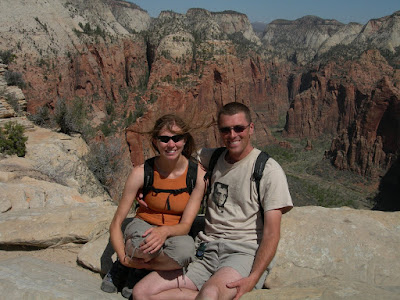
For the rest of our time in Zion we decided to try and relax and get a few hikes in. Angel’s Landing is a famous hike, winding up an incredibly exposed ridge line to the top of a formation. With the wind howling in our ears, it was even more exciting at the top - definitely not a picnic stop!


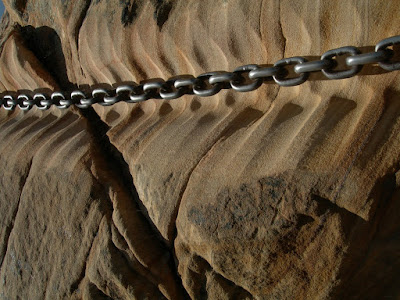
Soft Zion sandstone, eroded by the chain handrails on the Angels' Landing trail


Hanging on for the photo-op, on top of Angels' Landing

Tuesday, April 22, 2008

Camp Life

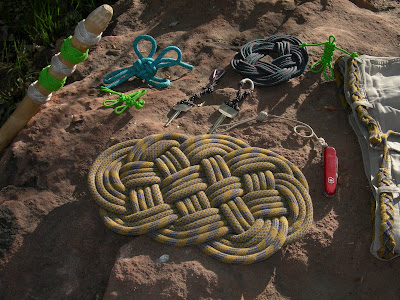
It’s a funny thing about climbing trips – the better the playing is, the longer you spend not playing. We’re back in Red Rocks, and the long, hot days in the canyons are leading to lots of days chilling out indoors, primarily at the library. Over the last 4.5 months in the van we’ve played a lot of scrabble and backgammon, and picked up a few hobbies that would probably never have occurred to us in our “normal” lives. Megan is on her second book of crossword puzzles, and Dave (taking advantage of the miles of cord and rope in our van) has been learning the fine art of decorative knotting. A rope we retired early in the trip has become a small rug, a belt, and an assortment of less useful items. Scraps of accessory cord and climbing-rope core decorate many of the small items cluttering Moby the minivan.


string theory

We’ve also accomplished some van ‘farming’ with several small crops of sprouts. Our successful crops were hard-won, our first few attempts were foiled by overnight freezes – sprouts don’t like to grow in freezing temperatures… Generally, we have eaten quite well considering we only have a tiny cooler and a camp stove and don’t always have access to fresh food. The Outback Oven given to us by Dave’s mum has greatly added to our cooking possibilities – baked mahi-mahi was a recent dinner highlight. However, upon our return to Vancouver and ‘normal’ life we don’t foresee PB&J sandwiches or oatmeal being top of our list for food! Cooking is generally not a problem, with the exception of cooking during a high wind. Wind really does blow when you’re cooking on an open flame stove!! We figure if we had to title our trip it might be something along the lines of “Cooking in the Lee of the Van/Outhouse/Any available windbreak”. This has been a source of some frustration and occasionally the inspiration to go out for cheap Mexican!

We have, somewhat predictably, gone through a small mountain of books and magazines, taking advantage of library sales in several states. CBC podcasts and the thousands of songs on our iPod have helped pass the time, but the Harry Potter books have been the listening favourite. We’re halfway through book 6 now, which is well over 100 hours of magical entertainment. Books on tape are great for winding down at the end of the day, but we have a habit of waking up wrapped in headphones, and Megan has had a few dreams where she was attending Hogwarts. Speaking of sleep: as the days get longer we’re sleeping a bit less, but 10 hours a night is still pretty common – especially after 12-hour climbing days in the Red Rocks canyons. Early in the trip, when days were shorter, we’d usually spend at least 12 hours in our two-sleeping-bag cocoon (or even longer when our water bottles froze in the tent).

We’ve been taking lots of pictures, mostly in bursts as we get to new places with new scenery. We promise to cull a few of the 100+ ‘gator pictures Dave took in the swamps before we make anyone sit through a slide show. The latest photo-favourite has been the desert wildflowers near Red Rock. The heavy rains this spring have led to the most amazing colours in the desert - and you can only take so many climbing pictures anyway…


Our latest ‘camp’ activity is a huge novelty: TV. We got a hotel room to chill and recharge before heading into Yosemite. The howling wind in the Red Rocks campground hasn’t been conducive to rest, so we opted for a night in a bed before we enter the ‘nylon ghetto’ of Camp 4. In keeping with that, our poor tent is looking a bit tattered. The 50+ mph winds over the last week tore loose one of the anchor points of our ‘4-season’ tent and flipped it over, which led to tears in the fly. We will definitely be having a chat with the manufacturer when we get back to Vancouver.

Monday, April 7, 2008

Red Rocks Round II, Part 1

We arrived in Red Rocks/Vegas just after a major climbing festival, but had no trouble getting a campsite and settling in. After our marathon drive, it was wonderful to set up our tent in a place where we could stay for weeks instead of just a few days. We settled pretty quickly into a routine of long climbing routes, cragging days, and lots of chilling out in the shade. We've also found the local YMCA, so instead of buying showers at the climbing gym (which are often cold) we can swim and soak in a hot tub for only a few extra dollars. We’ve spent so much time around here that it’s starting to feel like a second home - Dave even got a Vegas library card!

Megan’s various finger injuries are almost fully rehab-ed, so we’re getting on routes that she didn’t feel strong enough for in January. With this and the wonderful new Red Rocks guidebook, we have way more exploring to do than we can manage in a few weeks! One of the routes that we climbed this time was Birdland, a stellar 5-pitch route with a nice short approach. Well, a nice short approach for someone with less talent for taking wrong turns – Dave’s early-morning navigation gave us a bonus 40-minute scramble through manzanita bushes, but we still managed to be the first of the ten or so parties on the route. When we walked away there were six people sharing a two-square-foot ledge, with two more on the way – definitely glad we’re still operating on east-coast time.

North Carolina

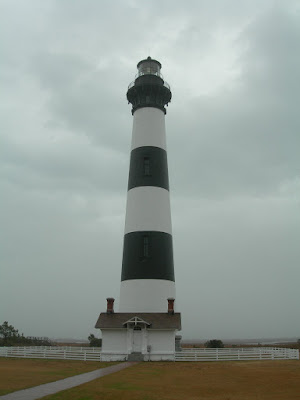
We started out North Carolina by bringing a huge rainstorm to the Outer Banks, a group of sand islands that are infamous for many reasons – the site of the first English colony in the Americas (who apparently completely disappeared without a trace and have never been found to this day… the next colony in Jamestown, Virginia worked out a bit better for the Queen), a graveyard for sunken ships due to the shifting shoals, the site of the first flight by the Wright Brothers and of course, pirates, Blackbeard in particular. Sounds exciting historically but unfortunately we were pretty much rained out. We did spend one afternoon walking on the beach and checking out the area's many lighthouses.


Racing west away from the rain, we ended up in the mountains of North Carolina, known as the Appalachian region. Here you find the Great Smoky Mountains, which are famously known for the blue mist that seems to hang eerily from their tops. We admired the blue from a distance, as it was definitely too early season to go up to the high mountain areas.

We did spend some time on lower mountains, enjoying a few days of fun climbing on the south side of Looking Glass. The climbing here was similar to Lovers’ Leap, on excellent granite. The difference being that at Lovers’ Leap the routes make use of horizontal quartz dikes, the Glass has lots of short incut wrinkles known as ‘eyebrows’. These make for interesting climbing, as it’s hard to gauge until you reach the next brow whether it has a good hold (or placement) under it. Unfortunately the rain caught up with us after a few days, so we didn’t get to finish our climbing “tick list” at the Glass.

As a place to be rained out, Asheville was pretty friendly. Asheville is the major city of the region and is a fantastic place, full of arts and crafts, funky eateries and the best all-you-can-eat-pizza place ever. The pizza place became a favourite for us as alongside the pizza they showed second run movies for $3 where you sat in comfy chairs and could drink excellent local beer. Mmmm. We also checked out some local craft markets and got some great ideas about future craft projects…

Rain continued though we did do a lot of hiking around the Looking Glass area, hoping for some more dry days. We also got quite familiar with the Brevard Town library, another great place to be in the rain. And it REALLY rained. During the evenings, we have been moving right along on our Harry Potter books on our iPod. We started with book one in September in Peru, we’re now just finishing book five…They have truly been a sanity saver for some long evenings without electricity; sometimes a book doesn’t cut it, you just want to be entertained.

Psychologically we felt ourselves attempting to revamp our trip plan, as we were trapped by rain where we were but it was still snowing towards the north where we eventually wanted to head. Ideas varied wildly in quality. Instead of the Appalachian trail leg we had considered in Virginia, we flirted (very) briefly with the idea of hiking the Bruce Trail (across the Bruce Peninsula in Ontario) in May and early June and having our only source of entertainment be a portable, solar powered radio with the local CBC. (At this point we realized that we were a bit homesick for Canada) Other ideas included working on a local organic farm, staying in Brevard and working on craft projects, going to Florida, or just simply going back to Vancouver to work. Crazy. Most of our plans were based on our being in Kingston, Ont. in mid-June for a week-long sailing trip on a tall ship. Alas, this was not to be – maybe next year…

We had wanted to climb for April at the Red River Gorge in Kentucky however obsessive weather checking revealed an excessive amount of rain, sleet, hail and of course flooding in the area. Then we checked the Red Rocks/Vegas forecast – it showed extensive perfect, long-term sunny weather. Hmmm… So we booked. The 3.5 day drive straight back across the country to Vegas was slightly complicated by the fact that Megan had a pretty yucky flu bug for the entire trip. Dave gets major credit and bonus points for having driven the ENTIRE 2700 miles single-handedly, with the added bonus of a barfing ‘navigator’ throughout Tennessee… Fun times!

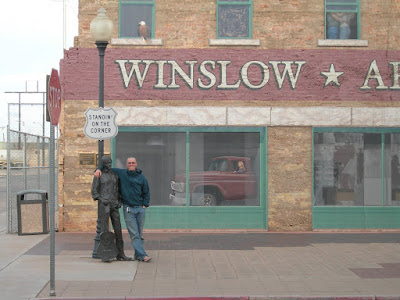
We stopped a few nights along the way and even lucked out with a motel room showing Ferris Bueller on our second night. Things were looking up! And we did have one token touristy stop, at a tiny town who's economy appears to be entirely based on having been mentioned in an Eagles song.


Standin' on a corner in Winslow, Arizona...

Tuesday, March 25, 2008

The Palmetto Coast and Savannah

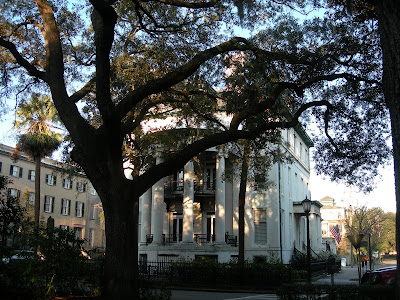
For a taste of the Old South, we headed to Savannah, Georgia for a few days of wandering. Savannah truly is as gorgeous as you would imagine, with street after street of fabulous old homes, city squares every few blocks with benches under the oaks (covered of course in Spanish moss, very hard to resist taking a ridiculous amount of photos of).


Rich maritime history abounds here, with stories of pirates, shipwrecks and Civil War marine battles on display in various museums. We visited one with an astounding collection of model ships and Dave may have found himself a new hobby building models. We are both enjoying learning about tall ships in anticipation of our tall ship adventure in June near Kingston, Ontario where we will be participating onboard for a one-week sail on a square-rigged tall ship. More on that later.

Going north from Savannah into South Carolina, we are following the Atlantic Coast, which is very different geographically from the Pacific. All along the southern Atlantic Coast are savannahs and marshs, the coast lined with palmettos, fan palm trees and pine forests. Today we are camped on the coast in the Francis Marion National Forest and had a chance to go for a fabulous trail run on the “Palmetto Trail” a 400 mile trail that runs along the coast of South Carolina and then through the state into the mountains.

Culturally, Georgia and South Carolina seem to be very much a part of the American Bible belt (we are judging this based on the number of churches that we pass (seems to be every 100 feet or so…as well as the large billboards everywhere advertising religion and pro-life sentiments).

Because of the lead up to the US election, it’s an interesting time to be in the states. Strangely, we haven’t seen much in the way yet of bumper stickers or lawn signs for any of the major candidates, although we have seen a disproportionate amount of signage for Ron Paul, a candidate who seems to have little actual support, but a knack for having signs posted near major highways.

Amidst the many bumper stickers we have noticed a few glimmering hopes for a different viewpoint. Here’s a few of our favourite bumper sightings:

49% of America agrees with 99% of the world.
Support our troops. We’ll need them to overthrow our government.
What if it really is all about the Hokey Pokey?

Okefenokee Swamp

Following a somewhat budget breaking time in New Orleans, we got back on the road, leaving Louisiana, but knowing we will definitely return (a trip with a week-long budget might be more appropriate – it’s hard not to eat out and pay for music in New Orleans…) We drove across five states in one day (this sounds impressive, but it only took us about 36 minutes to skirt the bottom of Alabama at the Gulf Coast), ending up in northern Florida for the night, having missed the park closure at the Georgia state park we were aiming for that evening. Providing evidence to changing weather patterns, during our one night in Florida it frosted!!! In Florida. The next day, we made it to southern Georgia, to a park that accesses the famed Okefenokee Swamp. Our first impression of Georgia in early March was that it was way cooler than we expected. Apparently they were having an unusual cold snap. We are adept at hitting cold snaps everywhere we go it seems.

Although in the last few weeks we have had ample opportunities to canoe in wetland/swamp areas, and have seen fabulous wildlife from a canoe, we couldn’t pass up the opportunity for a final swamp experience – the Okefenokee, the mystical swamp featured in myriad children’s stories and bad movies.


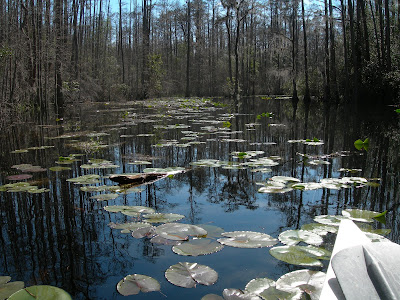
Black water and lily pads

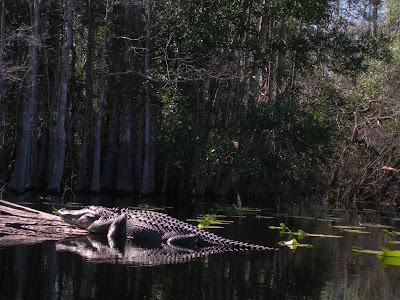
We spent two half days paddling through the waterways of the swamp, and with black waters covered with lily pads and surrounded by cypress and oak trees dripping with Spanish moss, the Oke did not disappoint. On our second day, we counted 18 alligator sightings. And we’re pretty sure we didn’t double count. The slightly chilled weather also provided us with one extremely good benefit as we prepared to canoe the Okefenokee – fewer mosquitoes!


Just can't get enough 'gator pictures...

Monday, March 3, 2008

The Big Easy

We are currently in New Orleans! The food and the music are amazing. Dave is currently practicing on his new harmonica - our latest instrument purchase. Another violin would be too bulky, even for Moby. In the southern US, Moby (our minivan), which in Vancouver seemed absolutely humongous, often seems like quite a shrimp in comparison to the huge vehicles that are pretty standard down here (especially in Texas…)

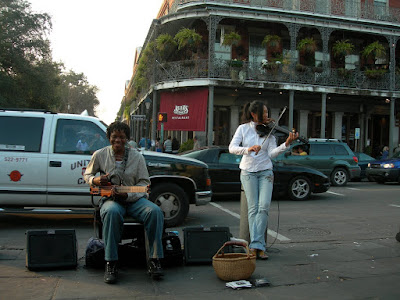
New Orleans is famous for many things, including jazz, blues, Mardi Gras, Bourbon Street partying, Creole cuisine, ghosts, vampires, voodoo and nowadays, extreme weather. But with only a few days and a small budget Dave and I decided to focus on the musical side of the city. In the first few hours of our first day we happened upon a live set of an electric viola (so we thought) and a guitar accompaniment playing outside the French market area. The viola player was a genius, they were playing everything from more classic jazz to covering the Beatles and Jimi Hendrix, but with their own style and with much flair. We bought their CD on the street and went back the next day to hear some more, as we heard they were pretty much regulars on that corner. Turns out the viola was actually a hybrid violin/viola with a C string (5 strings total!) but with the fingering of a violin.


Click on the link to hear samples of their music.

For an evening of jazz we checked out the classic Preservation Hall. The Hall was opened over 40 years ago as a means to preserve the classic New Orleans style of big-band jazz, during a time when rock 'n' roll was overtaking the nation and locals down here wanted to ensure their music endured. The venue was tiny, no alcohol or any beverages were sold (though you could bring in a drink bought somewhere else, it’s very common to drink on the street here) and there weren’t even bathrooms!! We were seated on the floor pretty much in the shadow of the drums. Except for a slight ringing in the ear when the cymbal was played the show was amazing, 5 guys playing their hearts out, most of them looked like they had been playing jazz for decades. An excellent experience.

It’s been three years since Hurricane Katrina came through and surprisingly we’ve been hard-pressed to find much obvious evidence of flood damage. The city seems like business as usual. We spent a good amount of time walking around the French Quarter to check out the amazing diversity of architecture, influenced by the French, the Spanish, the West Indies and West Africa and all mixed into a gorgeous medley of styles.

We’re off to Georgia tomorrow, but we’ll definitely be back. Maybe for jazz fest…

Cajun Country

"Cajun" is actually an americanization of "Acadien," and seems to be used to refer to anything which has some roots in the transplanted french colonists who, after being forcibly deported from Acadia (now Nova Scotia) wound up in Louisiana. In some places the word "Creole" is also used, but that seems to have widely varying meanings depending on who you ask, and most seem to just use "Cajun." The French areas of southern Louisiana are also referred to as "Acadiana" and Lafayette is the central city of the region.

When most people hear the word Cajun they think food, and with good reason. The food in Lafayette is incredible. The best meal of the trip thus far (including South America) was definitely Megan’s blackened catfish with crawfish etouffee. If you can’t fly down to try it (worth the trip) you can get the recipe at http://prejeans.com.

On the way to our next campsite we paid a visit (paid homage?) to the Tobaasco factory on Avery Island. We learned a bit about Tobasco production, learned that after 150+ years it’s still very much a family business, and scored some hot and spicy Tobasco swag.

We drove to a state park near New Orleans with the intention of moving into a hotel after a day or two at the park, but the park ended up being so convenient that we just stayed. This was good for our budget, which was in for a bit of a beating over the next few days. We took one day of R&R at camp before heading into the Big Easy.


Dave finds a new use for a bit of old climbing rope

Canoeing Louisiana – Armadillos and more Alligators

After spending time in both Austin and Houston we were ready for some time away from cities. We crossed the border from Texas to Louisiana and instantly felt the difference. Travelling around from state to state, we’ve been given the opportunity to really notice the widespread differences between the states – it’s difficult to understand how such different cultures can be united as one country. However, we are looking forward to exploring the central and Maritime regions of Canada as well, to see if the same holds true in Canada.

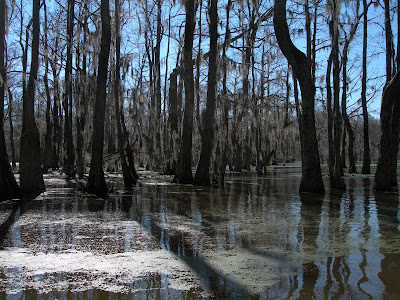
We thought we’d drive through Louisiana in a day or so, stop at New Orleans along the way and maybe eat some gumbo… we’ve been here a week so far and haven’t even been to New Orleans yet! We started our stay here at a state park with miles of cypress tree swamps, covered with Spanish moss, filled with lilypads and bright green algae, teeming with birds and wildlife, including our new favourite, the alligator. We rented canoes for a day of paddling about and were rewarded with some of the most beautiful scenery yet on our trip. Not what I would have expected from a swamp!


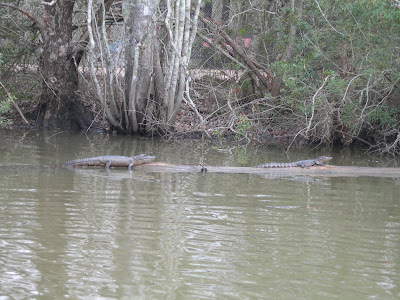
As well as all the birds, we viewed one nice fat alligator sunning himself on a log (from a safe distance!) and a nutria, an animal we’d never heard of before. The nutria is very similar in appearance to a muskrat, kind of like a small beaver but with a rat-like tail. Nutrias are introduced species in Louisiana and so are generally reviled as pests. The government has developed a hunting season as well as a host of recipes to entice people to come on out and catch nutrias for food but the program has not been too successful. If you know what a muskrat looks like you’ll have an appreciation for why they aren’t exactly an appetizing looking creature…


Our canoeing adventure was so fun that we decided to repeat it at a park further south, in an area called the Atchafalaya Basin, a hugely important wetland area. Our canoeing skills were starting to improve by day two, the first day we went out had seen several tree-canoe head-on collisions (thankfully our speed was low) as well as a few unfortunate incidents with bank side shrubbery. Capsizing into a murky swamp that does in fact have a very healthy population of alligators was not appealing so we were glad to be canoeing smoothly. In the Atchafalaya we were lucky enough to see not one but about five baby alligators! They were sunning themselves on logs, minding their own business. Except for some phaffing about with our camera for the first group, we tried also to mind our own business and let them be, as if a boat glides too close, they would slip down and into the water. We met a wonderful and knowledgeable park ranger who explained a lot to us about the wetland environment, including that alligators are much less aggressive than people might think (they are apparently significantly less aggressive than crocodiles for example), and that they generally try their best to steer clear of humans.


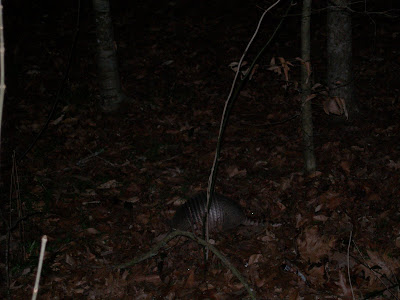
In keeping with the “A” letter animals, we also had our first sighting with an armadillo at our campsite – Megan heard something rustling about at night next to our van and went to check it out. All she saw was a brown creature with a long tail and it’s head stuck in a hole in the ground. In the dark it looked like the hugest rat ever seen!! Eww. So she got the high-powered headlamp to check it out and found it had strange patterns. Dave got out to take a look and it lifted its head. An armadillo! Apparently armadillos eat worms and so spend their evening digging around all over looking for dinner. They have very poor eyesight so wasn’t bothered by the bright light we shone on it. The next day we saw about 10 armadillos, scuttling about the bushes.